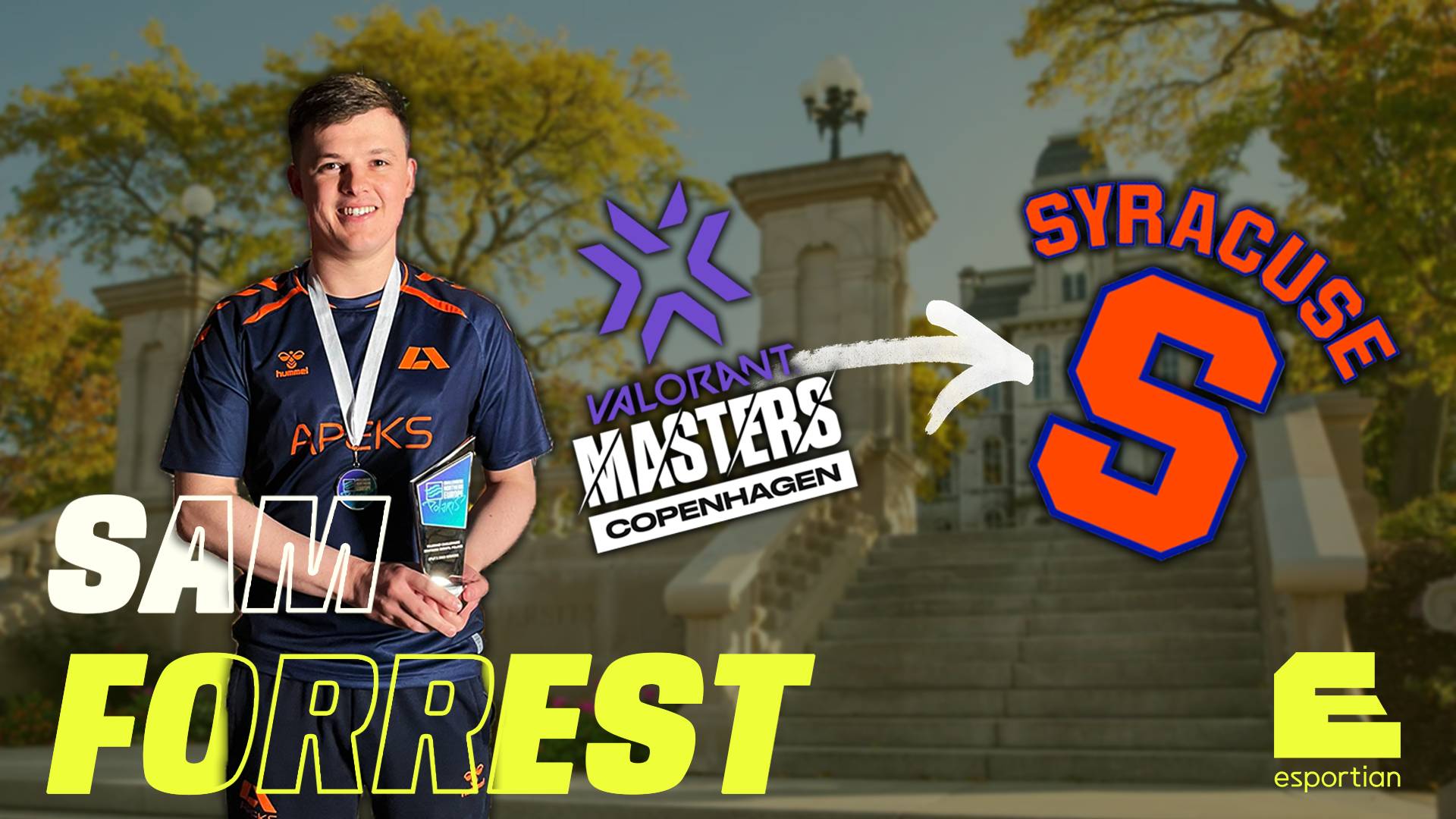
My recent live conversation with Sam Forrest offered a valuable case study in how esports, higher education, and professional development can intersect in a meaningful way. Rather than presenting esports as an isolated competitive pursuit, Sam’s story illustrates how the industry can function as a space for applied learning, career experimentation, and long-term skill formation.
Sam described entering esports in 2021 after completing a master’s degree in economics and finance and facing a difficult graduate job market. What began as independent experimentation with data analysis, shared publicly online, became his entry point into competitive VALORANT. From there, his role evolved from data-focused support into assistant coaching, strategy, and eventually management responsibilities within esports organizations. This trajectory is significant because it shows that esports careers are not always built through direct playing experience alone, they can also emerge through adjacent professional competencies such as analytics, communication, and organizational thinking.
A particularly important theme from the discussion was Sam’s nuanced view of analytics in esports. He argued that data is not always essential in a strict sense, but rather a performance-enhancing layer that can help teams improve incrementally. In his framing, analytics may contribute a marginal gain of one to five percent, rather than fundamentally transforming team performance on its own. This insight resists the tendency to overstate the power of data and instead positions analytics as one component within a wider coaching and decision-making ecosystem.
Sam also explained how his role expanded beyond data into opposition analysis, round preparation, and one-to-one player development. His account of reviewing player decision-making by asking questions rather than imposing conclusions is very professional on his end. It suggests a reflective coaching philosophy built around guided reasoning rather than authority.
Another major contribution of the discussion was the connection Sam made between esports and transferable professional skills. He noted that his work in esports exposed him to coding, APIs, and Python in ways that directly influenced his later data career. More broadly, he emphasized confidence-building, communication with senior stakeholders, teamwork, time management, and the handling of difficult interpersonal situations. What emerges here is a broader argument: esports can be a site of professional formation, particularly when individuals engage with it in structured roles that demand responsibility and collaboration.
The conversation also offered a realistic perspective on the operational complexity of esports organizations. Sam reflected on experiences across tier three to tier one environments, including financially unstable organizations, unpaid player situations, and differing organizational priorities between performance and content. These observations are important because they move beyond the romanticism often associated with esports and instead present the field as an evolving industry with both opportunities and structural weaknesses. His experience on both the management and coaching sides gave him a more balanced understanding of incentives, expectations, and organizational communication.
A key turning point in the conversation was Sam’s explanation of why he chose to pursue an MBA in the United States, specifically at Syracuse University. He framed the decision not as a simple academic next step, but as a strategic investment in future career development. Although Syracuse was not the most affordable option, he emphasized the value of visiting campus, speaking with esports and business school staff, and assessing where he felt the strongest institutional fit. He also noted that U.S. MBA programs appeared to offer stronger salary upside and broader opportunity than remaining in the UK. This reinforces an important principle in international education decision-making: students do not choose universities on price alone, but on a perceived combination of academic value, personal fit, and long-term return.
What makes Sam’s story especially compelling is that it does not frame education and esports as competing choices. Instead, the conversation shows how they can reinforce one another. His academic background gave him entry points into esports through data and analysis, while esports gave him practical experience, leadership exposure, and clearer direction for postgraduate study. In this sense, his progression reflects a hybrid model of career development in which formal education and esports experience operate not as alternatives, but as mutually strengthening assets.
Overall, the discussion with Sam provides a grounded example of what study abroad and esports can look like when approached with intentionality. For students considering international study through esports, Sam’s experience demonstrates that the strongest pathways are often built not only on passion for gaming, but on the ability to translate that passion into transferable value.
Live talk:
Sam described entering esports in 2021 after completing a master’s degree in economics and finance and facing a difficult graduate job market. What began as independent experimentation with data analysis, shared publicly online, became his entry point into competitive VALORANT. From there, his role evolved from data-focused support into assistant coaching, strategy, and eventually management responsibilities within esports organizations. This trajectory is significant because it shows that esports careers are not always built through direct playing experience alone, they can also emerge through adjacent professional competencies such as analytics, communication, and organizational thinking.
A particularly important theme from the discussion was Sam’s nuanced view of analytics in esports. He argued that data is not always essential in a strict sense, but rather a performance-enhancing layer that can help teams improve incrementally. In his framing, analytics may contribute a marginal gain of one to five percent, rather than fundamentally transforming team performance on its own. This insight resists the tendency to overstate the power of data and instead positions analytics as one component within a wider coaching and decision-making ecosystem.
Sam also explained how his role expanded beyond data into opposition analysis, round preparation, and one-to-one player development. His account of reviewing player decision-making by asking questions rather than imposing conclusions is very professional on his end. It suggests a reflective coaching philosophy built around guided reasoning rather than authority.
Another major contribution of the discussion was the connection Sam made between esports and transferable professional skills. He noted that his work in esports exposed him to coding, APIs, and Python in ways that directly influenced his later data career. More broadly, he emphasized confidence-building, communication with senior stakeholders, teamwork, time management, and the handling of difficult interpersonal situations. What emerges here is a broader argument: esports can be a site of professional formation, particularly when individuals engage with it in structured roles that demand responsibility and collaboration.
The conversation also offered a realistic perspective on the operational complexity of esports organizations. Sam reflected on experiences across tier three to tier one environments, including financially unstable organizations, unpaid player situations, and differing organizational priorities between performance and content. These observations are important because they move beyond the romanticism often associated with esports and instead present the field as an evolving industry with both opportunities and structural weaknesses. His experience on both the management and coaching sides gave him a more balanced understanding of incentives, expectations, and organizational communication.
A key turning point in the conversation was Sam’s explanation of why he chose to pursue an MBA in the United States, specifically at Syracuse University. He framed the decision not as a simple academic next step, but as a strategic investment in future career development. Although Syracuse was not the most affordable option, he emphasized the value of visiting campus, speaking with esports and business school staff, and assessing where he felt the strongest institutional fit. He also noted that U.S. MBA programs appeared to offer stronger salary upside and broader opportunity than remaining in the UK. This reinforces an important principle in international education decision-making: students do not choose universities on price alone, but on a perceived combination of academic value, personal fit, and long-term return.
What makes Sam’s story especially compelling is that it does not frame education and esports as competing choices. Instead, the conversation shows how they can reinforce one another. His academic background gave him entry points into esports through data and analysis, while esports gave him practical experience, leadership exposure, and clearer direction for postgraduate study. In this sense, his progression reflects a hybrid model of career development in which formal education and esports experience operate not as alternatives, but as mutually strengthening assets.
Overall, the discussion with Sam provides a grounded example of what study abroad and esports can look like when approached with intentionality. For students considering international study through esports, Sam’s experience demonstrates that the strongest pathways are often built not only on passion for gaming, but on the ability to translate that passion into transferable value.
Live talk:
