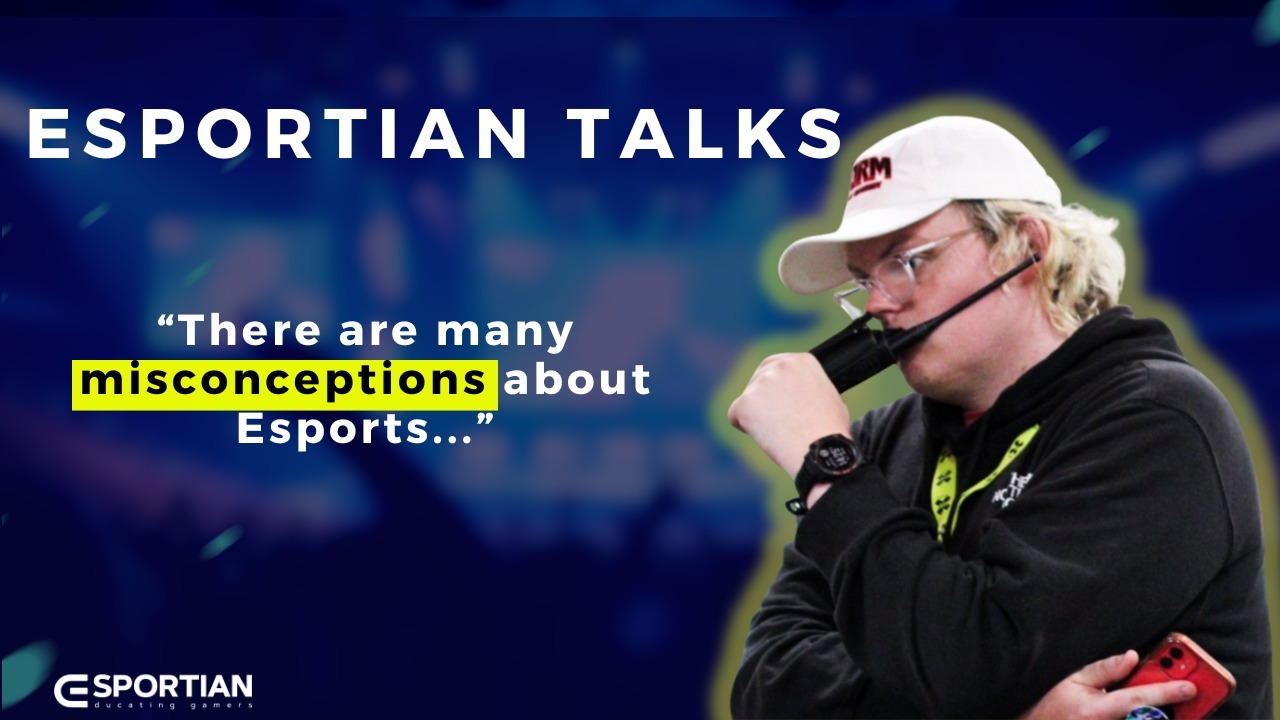
Few people embody the multifaceted evolution of collegiate esports as clearly as Tom Screech . His work spans academia, media, and community development, three pillars that increasingly define the sustainability of collegiate gaming. As an instructor at Harrisburg University of Science and Technology , executive at College Esports News, and co-founder of the Collegiate Fighting Game Community (CFGC), Tom’’s career illustrates how education, media visibility, and collaboration can transform esports into an enduring academic and cultural ecosystem.
In this conversation, he discussed how academic programs are preparing future leaders, why collegiate esports media matters, and how authentic partnerships drive the next phase of industry growth.
Screech’s teaching philosophy is rooted in realism: an esports management degree is not a gaming degree, it’s a business degree through the lens of gaming. At Harrisburg University, he trains students in event logistics, sponsorship strategy, marketing, and production management. “Esports is a live event business,” he explains. “We arrive early, set up, create experiences for fans and players, then break everything down. It’s operations, client management, and teamwork.”
Through this lens, esports education is less about gameplay and more about industry application. Students analyze tournaments like the Fortnite World Cup or DreamHack not as spectators, but as future producers breaking down lighting setups, broadcast run sheets, or partnership activations. The goal is to graduate students who are industry-ready professionals who can manage events, negotiate with sponsors, and sustain organizations beyond the competition stage.
Screech also dispels the misconception that esports management degrees are niche or less rigorous than traditional disciplines. “It’s not about learning to play better,” he says. “It’s about learning how to run a business, market a brand, and build community through competitive gaming.” For students passionate about games but uninterested in coding or design, these programs offer a pathway to meaningful careers within an expanding digital industry.
His leadership at College Esports News (CEN) stems from a conviction that storytelling is central to the legitimacy of collegiate gaming. “Traditional sports have ESPN; collegiate esports needed its own platform,” he notes. CEN fills that gap spotlighting programs, coaches, and players often overlooked by mainstream coverage. From interviews to investigative features and the Torchbearers podcast, the organization curates narratives that both celebrate success and examine challenges.
For Screech, visibility is infrastructure. “Media amplifies community,” he says. “It gives programs credibility, recruits information, and administrators data to justify investment.” The publication has quickly become a trusted resource for students, educators, and parents navigating an increasingly complex collegiate ecosystem. International readers and academic institutions alike now cite CEN as a central hub for verified, educational esports content.
Equally important, Screech views CEN’s mission as symbiotic, helping the scene grow by informing and engaging its participants. “We’re not chasing gossip,” he clarifies. “We’re documenting the impact of how programs succeed, adapt, or even fail. Those stories help the industry mature.”
Beyond education and media, Screech is deeply embedded in community-building through the Collegiate Fighting Game Community (CFGC), a grassroots league that serves a niche yet passionate demographic. “The FGC was always underrepresented in collegiate spaces,” he explains. “Everyone said, ‘Just play Smash,’ but fighting games are diverse microcultures.” CFGC was designed to fill that gap, offering students competition and belonging across multiple titles.
Unlike most leagues, CFGC sustains itself through a low-cost membership model rather than heavy sponsorship dependence. This model, Screech argues, keeps the organization accountable to its members and ensures long-term integrity. “For the people, by the people,” he says. “When students contribute directly, it creates ownership and authenticity.”
That philosophy of community-first growth extends to his views on sponsorship. Screech advocates for relationships that prioritize grassroots development over corporate metrics. “Brands that succeed in esports understand they’re supporting culture, not just selling to it,” he explains. The result is a network of partnerships that does not overshadow the human side of competition.
The Future of Collegiate Esports
Looking ahead, Screech envisions a landscape of broader acceptance, interdisciplinary collaboration, and artistic recognition. He describes esports as a liberal art, not a hard science, one that unites creativity, performance, and technology. “We care about how our stream looks, how our stage feels, that’s artistry,” he emphasizes. “Every school’s version of esports can look different, and that’s a strength, not a flaw.”
He also predicts that the next generation of students will enter college already fluent in esports culture. “Eventually, I won’t need to teach ‘Intro to Esports,’” he says. “Students will arrive with foundational knowledge, ready to specialize and innovate.” The key, he believes, is adaptability: understanding that programs may evolve under athletics, business, or student life depending on institutional goals but all can succeed if their mission aligns with student engagement and community impact.
Ultimately, Screech views esports not as a passing trend but as a permanent bridge between entertainment, education, and enterprise. “This industry is built on passion,” he concludes. “If we teach students to channel that passion into leadership and service, collegiate esports will thrive for decades.”
Tom Screech’s journey across teaching, media, and community leadership underscores a unifying idea: collegiate esports thrives where education, storytelling, and collaboration intersect. Programs like Harrisburg’s prepare students for real careers. Media platforms like CEN legitimize their work. And grassroots initiatives like CFGC ensure inclusivity at every level. Together, they are shaping a future where esports isn’t just played it’s understood, taught, and sustained.
In this conversation, he discussed how academic programs are preparing future leaders, why collegiate esports media matters, and how authentic partnerships drive the next phase of industry growth.
Screech’s teaching philosophy is rooted in realism: an esports management degree is not a gaming degree, it’s a business degree through the lens of gaming. At Harrisburg University, he trains students in event logistics, sponsorship strategy, marketing, and production management. “Esports is a live event business,” he explains. “We arrive early, set up, create experiences for fans and players, then break everything down. It’s operations, client management, and teamwork.”
Through this lens, esports education is less about gameplay and more about industry application. Students analyze tournaments like the Fortnite World Cup or DreamHack not as spectators, but as future producers breaking down lighting setups, broadcast run sheets, or partnership activations. The goal is to graduate students who are industry-ready professionals who can manage events, negotiate with sponsors, and sustain organizations beyond the competition stage.
Screech also dispels the misconception that esports management degrees are niche or less rigorous than traditional disciplines. “It’s not about learning to play better,” he says. “It’s about learning how to run a business, market a brand, and build community through competitive gaming.” For students passionate about games but uninterested in coding or design, these programs offer a pathway to meaningful careers within an expanding digital industry.
His leadership at College Esports News (CEN) stems from a conviction that storytelling is central to the legitimacy of collegiate gaming. “Traditional sports have ESPN; collegiate esports needed its own platform,” he notes. CEN fills that gap spotlighting programs, coaches, and players often overlooked by mainstream coverage. From interviews to investigative features and the Torchbearers podcast, the organization curates narratives that both celebrate success and examine challenges.
For Screech, visibility is infrastructure. “Media amplifies community,” he says. “It gives programs credibility, recruits information, and administrators data to justify investment.” The publication has quickly become a trusted resource for students, educators, and parents navigating an increasingly complex collegiate ecosystem. International readers and academic institutions alike now cite CEN as a central hub for verified, educational esports content.
Equally important, Screech views CEN’s mission as symbiotic, helping the scene grow by informing and engaging its participants. “We’re not chasing gossip,” he clarifies. “We’re documenting the impact of how programs succeed, adapt, or even fail. Those stories help the industry mature.”
Beyond education and media, Screech is deeply embedded in community-building through the Collegiate Fighting Game Community (CFGC), a grassroots league that serves a niche yet passionate demographic. “The FGC was always underrepresented in collegiate spaces,” he explains. “Everyone said, ‘Just play Smash,’ but fighting games are diverse microcultures.” CFGC was designed to fill that gap, offering students competition and belonging across multiple titles.
Unlike most leagues, CFGC sustains itself through a low-cost membership model rather than heavy sponsorship dependence. This model, Screech argues, keeps the organization accountable to its members and ensures long-term integrity. “For the people, by the people,” he says. “When students contribute directly, it creates ownership and authenticity.”
That philosophy of community-first growth extends to his views on sponsorship. Screech advocates for relationships that prioritize grassroots development over corporate metrics. “Brands that succeed in esports understand they’re supporting culture, not just selling to it,” he explains. The result is a network of partnerships that does not overshadow the human side of competition.
The Future of Collegiate Esports
Looking ahead, Screech envisions a landscape of broader acceptance, interdisciplinary collaboration, and artistic recognition. He describes esports as a liberal art, not a hard science, one that unites creativity, performance, and technology. “We care about how our stream looks, how our stage feels, that’s artistry,” he emphasizes. “Every school’s version of esports can look different, and that’s a strength, not a flaw.”
He also predicts that the next generation of students will enter college already fluent in esports culture. “Eventually, I won’t need to teach ‘Intro to Esports,’” he says. “Students will arrive with foundational knowledge, ready to specialize and innovate.” The key, he believes, is adaptability: understanding that programs may evolve under athletics, business, or student life depending on institutional goals but all can succeed if their mission aligns with student engagement and community impact.
Ultimately, Screech views esports not as a passing trend but as a permanent bridge between entertainment, education, and enterprise. “This industry is built on passion,” he concludes. “If we teach students to channel that passion into leadership and service, collegiate esports will thrive for decades.”
Tom Screech’s journey across teaching, media, and community leadership underscores a unifying idea: collegiate esports thrives where education, storytelling, and collaboration intersect. Programs like Harrisburg’s prepare students for real careers. Media platforms like CEN legitimize their work. And grassroots initiatives like CFGC ensure inclusivity at every level. Together, they are shaping a future where esports isn’t just played it’s understood, taught, and sustained.
