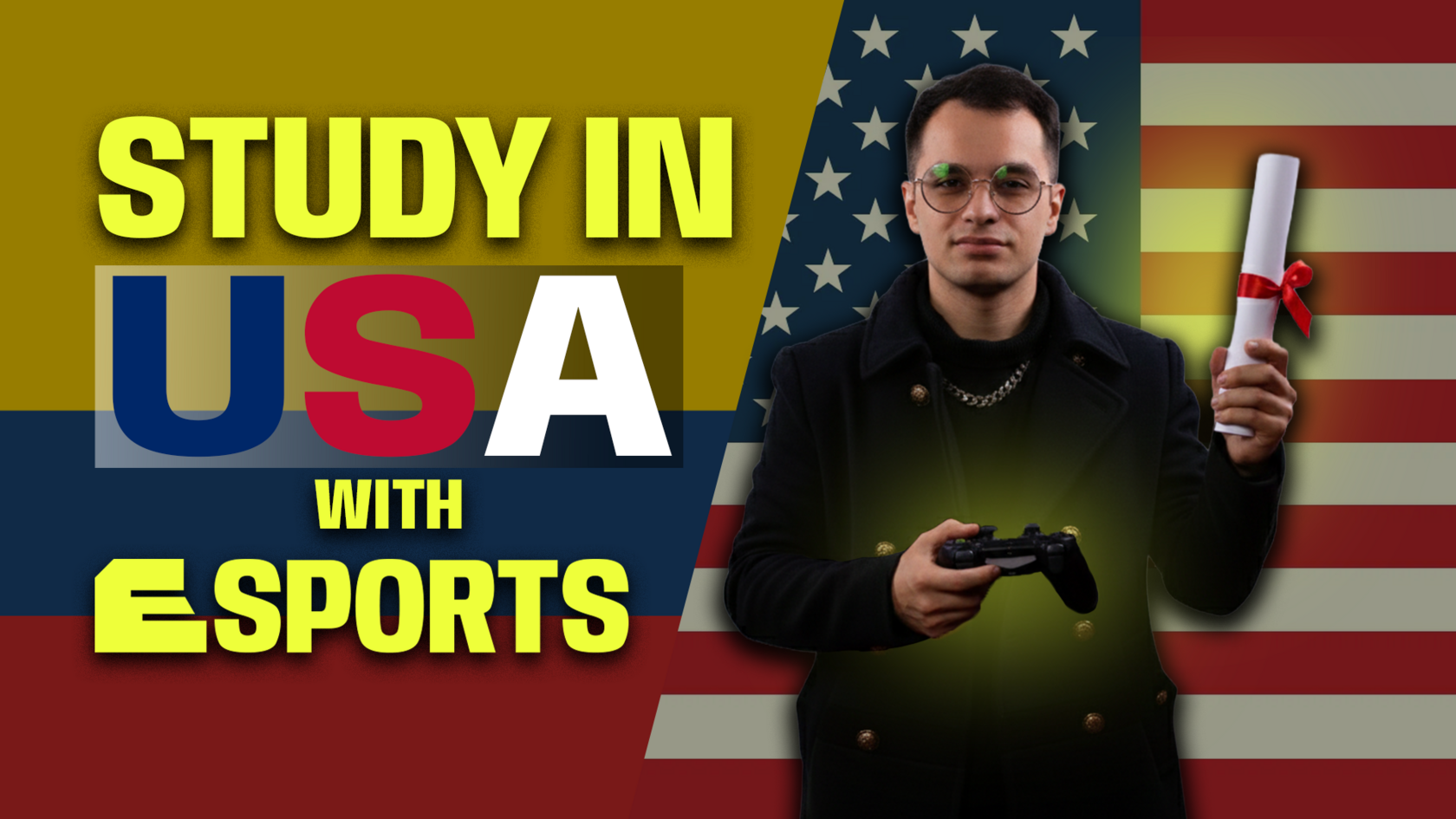
Carlos Bravo offers a perspective on the esports and gaming-media ecosystem in Colombia. His professional trajectory spans tournament operations, casting, journalism, SEO writing, content strategy, and brand-facing gaming projects. One of the most important elements of Carlos’s story is that it did not begin inside a large company. It began with La Grieta, a local initiative launched with friends around 2016 to create national-level competition in Colombia. In the interview, he described that stage as entrepreneurial in the strictest sense: building tournaments, learning event execution, developing talent, and discovering how much invisible labor sits behind “just running a competition.”
Carlos then moved into a more institutional layer of the ecosystem through LVP - Liga de Videojuegos Profesional ’s Colombian expansion. Carlos’s later shift toward gaming journalism and content is equally important because it reflects a broader truth about esports careers: sustainable roles are often found adjacent to competition rather than only inside it. That trajectory also supports one of his central arguments in the conversation: many young people misunderstand where viable work in gaming actually exists. Carlos does not dismiss esports. Instead, he reframes it. In his telling, the market in Colombia is too volatile and too small to sustain naive expectations of fast upward mobility for most entrants. The lesson is not “do not enter”; it is to enter with realistic expectations.
The Colombian market potential
Carlos repeatedly emphasized that the Colombian esports market fluctuates. His point was not that there is no ecosystem, but that the ecosystem is inconsistent, fragmented, and difficult to monetize at scale. That diagnosis fits the broader evidence. Colombia is a large country of roughly 54 million people, yet size alone has not translated into a deeply structured esports labor market. At the same time, major telecommunications brands have continued to invest in gaming-facing infrastructure: Telefónica and SouthGG opened the Movistar GameClub in Bogotá in 2024, presenting it as the largest venue of its kind in the country, and Claro RD opened a high-end gaming center in Plaza Claro in 2025 with dedicated event, streaming, and competition infrastructure. These moves show that brands do see value in the gaming audience, but infrastructure growth does not automatically produce a stable employment ecosystem.
This is where Carlos’s analysis becomes especially useful. He argues that many investors in Colombia and LATAM still evaluate esports using benchmarks imported from Europe, North America, Korea, or China, without accounting for regional differences in market maturity, consumer behavior, technology access, and monetization logic. In practical terms, that means expectations are often set by ecosystems with stronger publisher support, larger media rights structures, higher consumer purchasing power, and more consolidated sponsorship pathways. His argument is less ideological than operational: copying a model is not the same as transplanting the conditions that made that model work.
Monetization remains the structural bottleneck
One of the strongest parts of the interview was Carlos’s explanation of how esports projects are actually sold to brands. In his experience, organizers in Colombia often end up selling visibility rather than direct commercial conversion: logo placement in broadcasts, caster mentions, branded integrations, and event experience. That resembles media inventory more than it resembles a guaranteed sales engine. His point is important because it exposes a recurring misunderstanding in the region: brand interest in gaming does not mean that gaming audiences will convert into immediate purchases at the rate some sponsors expect.
His distinction between leagues and teams is also useful. A league or tournament organizer can sell a broader experience, while a team has fewer revenue levers unless it has become, in effect, a media brand. This is why he sees community-building as essential. A team that wants sponsors cannot rely only on match results; it must operate like a creator-driven platform with an audience, a voice, and ongoing relevance between competitions. That interpretation mirrors broader creator-economy logic and helps explain why some gaming organizations survive not because they win the most, but because they communicate the best.
Gaming media and creator paths are real, but still selective
Carlos’s account also complicates the popular assumption that “there are no opportunities.” His position is more precise. There are opportunities, but they are narrow, competitive, and often indirect. The route may pass through journalism, SEO writing, social media management, event operations, commentary, community building, or advertising strategy before it ever resembles a traditional esports job title. His own career is evidence of that layered pathway.
For teenagers and young adults, his advice was taking action early, experimenting, and creating content before conditions feel perfect. He also stressed savings, cost control, and business literacy. In his view, passion without economic planning becomes vulnerability. Content projects, tournaments, and small media brands do not fail only because ideas are weak; they often fail because founders underestimate costs, overestimate short-term returns, and lack the commercial judgment to choose the right partners.
What students should understand before choosing this path
He tells students to stop romanticizing the industry. In the interview, he warned against the “smoke” often sold around esports: the promise that everyone can become wealthy, famous, or professionally secure if they just enter the space. His position is that esports can create value, but that value must be pursued strategically. Young people with unusual competitive talent should maximize it while they can. Those who are more interested in content, business, or media should build transferable skills alongside their gaming interest. For most people, the wisest approach is to treat esports as a powerful complement to education and employability, not as a substitute for them.
That point becomes even sharper when placed next to recent educational developments in Colombia. Universidad del Rosario has launched esports-focused academic offerings and publicly presented Esports Management as a professional pathway. The existence of such programs shows the sector is being taken seriously at the academic level. At the same time, Carlos’s critique is that education must connect to a real labor market. If a country builds credentials faster than it builds stable industry roles, then academic enthusiasm can outpace professional absorption. That is not an argument against education. It is an argument for designing education with stronger alignment to actual ecosystem demand.
The interview with Carlos Bravo is valuable precisely because it avoids both cynicism and hype. He does not deny that esports and gaming can open doors. His own career proves they can. He does not deny that Colombia and LATAM have talent, audiences, and entrepreneurial energy. They clearly do. What he rejects is the illusion that passion alone is enough.
His argument is that esports in Colombia remains a structurally uneven field: promising, culturally alive, commercially interesting, but still too fragile to sustain inflated expectations. For young people, that means the smartest move is not withdrawal; it is preparation. Build skills that can be used in various industries. Learn content, communication, operations, marketing, and business fundamentals. Use gaming as leverage and above all, understand that in emerging ecosystems, survival belongs less to the loudest dreamers than to the most disciplined builders.
DM me and let's build value in the esports and education space!
Live talk in Spanish:
Carlos then moved into a more institutional layer of the ecosystem through LVP - Liga de Videojuegos Profesional ’s Colombian expansion. Carlos’s later shift toward gaming journalism and content is equally important because it reflects a broader truth about esports careers: sustainable roles are often found adjacent to competition rather than only inside it. That trajectory also supports one of his central arguments in the conversation: many young people misunderstand where viable work in gaming actually exists. Carlos does not dismiss esports. Instead, he reframes it. In his telling, the market in Colombia is too volatile and too small to sustain naive expectations of fast upward mobility for most entrants. The lesson is not “do not enter”; it is to enter with realistic expectations.
The Colombian market potential
Carlos repeatedly emphasized that the Colombian esports market fluctuates. His point was not that there is no ecosystem, but that the ecosystem is inconsistent, fragmented, and difficult to monetize at scale. That diagnosis fits the broader evidence. Colombia is a large country of roughly 54 million people, yet size alone has not translated into a deeply structured esports labor market. At the same time, major telecommunications brands have continued to invest in gaming-facing infrastructure: Telefónica and SouthGG opened the Movistar GameClub in Bogotá in 2024, presenting it as the largest venue of its kind in the country, and Claro RD opened a high-end gaming center in Plaza Claro in 2025 with dedicated event, streaming, and competition infrastructure. These moves show that brands do see value in the gaming audience, but infrastructure growth does not automatically produce a stable employment ecosystem.
This is where Carlos’s analysis becomes especially useful. He argues that many investors in Colombia and LATAM still evaluate esports using benchmarks imported from Europe, North America, Korea, or China, without accounting for regional differences in market maturity, consumer behavior, technology access, and monetization logic. In practical terms, that means expectations are often set by ecosystems with stronger publisher support, larger media rights structures, higher consumer purchasing power, and more consolidated sponsorship pathways. His argument is less ideological than operational: copying a model is not the same as transplanting the conditions that made that model work.
Monetization remains the structural bottleneck
One of the strongest parts of the interview was Carlos’s explanation of how esports projects are actually sold to brands. In his experience, organizers in Colombia often end up selling visibility rather than direct commercial conversion: logo placement in broadcasts, caster mentions, branded integrations, and event experience. That resembles media inventory more than it resembles a guaranteed sales engine. His point is important because it exposes a recurring misunderstanding in the region: brand interest in gaming does not mean that gaming audiences will convert into immediate purchases at the rate some sponsors expect.
His distinction between leagues and teams is also useful. A league or tournament organizer can sell a broader experience, while a team has fewer revenue levers unless it has become, in effect, a media brand. This is why he sees community-building as essential. A team that wants sponsors cannot rely only on match results; it must operate like a creator-driven platform with an audience, a voice, and ongoing relevance between competitions. That interpretation mirrors broader creator-economy logic and helps explain why some gaming organizations survive not because they win the most, but because they communicate the best.
Gaming media and creator paths are real, but still selective
Carlos’s account also complicates the popular assumption that “there are no opportunities.” His position is more precise. There are opportunities, but they are narrow, competitive, and often indirect. The route may pass through journalism, SEO writing, social media management, event operations, commentary, community building, or advertising strategy before it ever resembles a traditional esports job title. His own career is evidence of that layered pathway.
For teenagers and young adults, his advice was taking action early, experimenting, and creating content before conditions feel perfect. He also stressed savings, cost control, and business literacy. In his view, passion without economic planning becomes vulnerability. Content projects, tournaments, and small media brands do not fail only because ideas are weak; they often fail because founders underestimate costs, overestimate short-term returns, and lack the commercial judgment to choose the right partners.
What students should understand before choosing this path
He tells students to stop romanticizing the industry. In the interview, he warned against the “smoke” often sold around esports: the promise that everyone can become wealthy, famous, or professionally secure if they just enter the space. His position is that esports can create value, but that value must be pursued strategically. Young people with unusual competitive talent should maximize it while they can. Those who are more interested in content, business, or media should build transferable skills alongside their gaming interest. For most people, the wisest approach is to treat esports as a powerful complement to education and employability, not as a substitute for them.
That point becomes even sharper when placed next to recent educational developments in Colombia. Universidad del Rosario has launched esports-focused academic offerings and publicly presented Esports Management as a professional pathway. The existence of such programs shows the sector is being taken seriously at the academic level. At the same time, Carlos’s critique is that education must connect to a real labor market. If a country builds credentials faster than it builds stable industry roles, then academic enthusiasm can outpace professional absorption. That is not an argument against education. It is an argument for designing education with stronger alignment to actual ecosystem demand.
The interview with Carlos Bravo is valuable precisely because it avoids both cynicism and hype. He does not deny that esports and gaming can open doors. His own career proves they can. He does not deny that Colombia and LATAM have talent, audiences, and entrepreneurial energy. They clearly do. What he rejects is the illusion that passion alone is enough.
His argument is that esports in Colombia remains a structurally uneven field: promising, culturally alive, commercially interesting, but still too fragile to sustain inflated expectations. For young people, that means the smartest move is not withdrawal; it is preparation. Build skills that can be used in various industries. Learn content, communication, operations, marketing, and business fundamentals. Use gaming as leverage and above all, understand that in emerging ecosystems, survival belongs less to the loudest dreamers than to the most disciplined builders.
DM me and let's build value in the esports and education space!
Live talk in Spanish:
