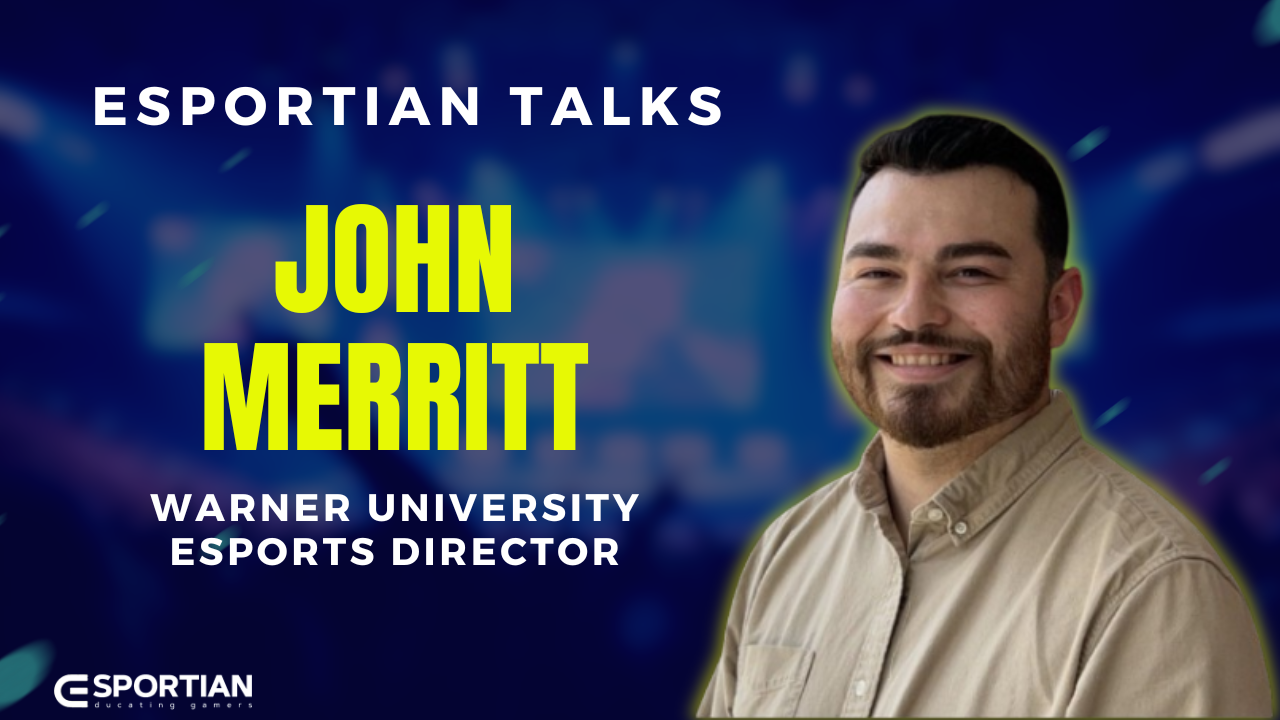
John Merritt leads the Warner University esports program in Florida, after launching three previous programs in Oklahoma. From humble beginnings living in his mom’s living room and juggling part-time admin work he grew his passion into a platform that helps student-athletes balance academics, competition, and personal growth.
John experienced the emotional toll when a program he helped launch closed. Watching students lose their stage, feeling limited by shrinking budgets, and carrying the pressure of providing for a family was overwhelming. These disappointments tested his faith and resilience.
Rather than overwork, John adopted rest as a strategic tool. He committed to weekend breaks, shutting off emails and messages to recharge. He sought physical wellness rehabbing injuries and focused on spiritual and emotional self-care. To John, filling your own cup is the point: only then can you pour into others.
The role of a director or coach is often misunderstood. You're not just coordinating teams, you mediate between administration and players. John emphasizes:
He also offers tailored academic flexibility to student-athletes, especially those competing professionally. When mental health needs arise, he makes difficult but necessary decisions to ensure student well‑being over competitive success.
Keys to Long‑Term Success:
John’s definition of success evolved. In Oklahoma, it was all about competition and results. Today, it’s about:
“Success is seeing my students thrive even years after they’ve left my program.”
“Don’t give up. Don’t base your identity on wins or losses. Focus on serving. Everything else will follow.”
John Merritt’s journey is about building people. His story is a roadmap for directors, coaches, and institutions that want to build esports programs with integrity and empathy.
John experienced the emotional toll when a program he helped launch closed. Watching students lose their stage, feeling limited by shrinking budgets, and carrying the pressure of providing for a family was overwhelming. These disappointments tested his faith and resilience.
Rather than overwork, John adopted rest as a strategic tool. He committed to weekend breaks, shutting off emails and messages to recharge. He sought physical wellness rehabbing injuries and focused on spiritual and emotional self-care. To John, filling your own cup is the point: only then can you pour into others.
The role of a director or coach is often misunderstood. You're not just coordinating teams, you mediate between administration and players. John emphasizes:
- Setting clear boundaries with players and colleagues
- Delegating effectively to avoid overloading
- Maintaining integrity, honesty, and empathy in every conversation
He also offers tailored academic flexibility to student-athletes, especially those competing professionally. When mental health needs arise, he makes difficult but necessary decisions to ensure student well‑being over competitive success.
Keys to Long‑Term Success:
- Programs must scale mindfully. John recommends hiring title-specific coaches even part-time or remote staff to support multiple teams, easing director overload.
- Success depends on working with administration. John highlights onboarding key campus advocates early and building empathy around esports' unique challenges.
- Encourage student-led creativity through content, streaming opportunities, and partnerships to build a culture rooted in belonging and shared mission.
- Combat burnout by prioritizing rest, setting boundaries, and taking care of your mental and physical health.
- Bridge gaps with administration through proactive, regular communication and relationship-building across departments.
- Tackle understaffing by recruiting passionate students, offering work-study roles, and hiring part-time or remote coaches per game title.
- Support overloaded students by focusing on flexibility, mental health support, and adapting schedules to meet individual needs.
- Scale programs wisely by assigning coaches to specific esports titles instead of relying on a one-size-fits-all coaching model.
John’s definition of success evolved. In Oklahoma, it was all about competition and results. Today, it’s about:
- Serving students holistically
- Helping them succeed in life, not just esports
- Being a lasting mentor, not just a match-day coach
“Success is seeing my students thrive even years after they’ve left my program.”
“Don’t give up. Don’t base your identity on wins or losses. Focus on serving. Everything else will follow.”
John Merritt’s journey is about building people. His story is a roadmap for directors, coaches, and institutions that want to build esports programs with integrity and empathy.
