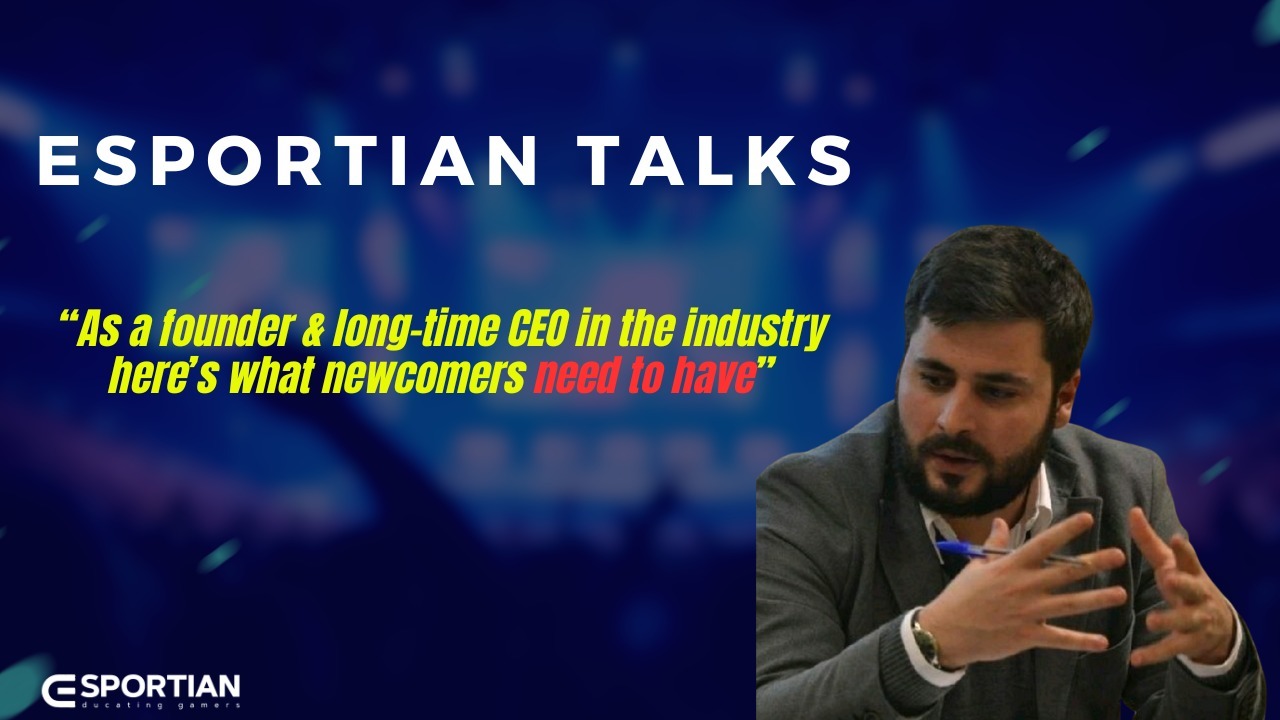
Esports is often discussed through the lens of teams, players, prize pools, and broadcasting. Yet beneath this visible layer lies a complex, globalized industry that requires specialized knowledge across law, business, media and community management. It is within this intersection that the work of Max Dalmau becomes particularly significant.
His professional trajectory from founding and managing an esports organization, to consulting for top gaming creators, and now advising the UNHCR, the UN Refugee Agency and leading academic innovation at ISDE , exemplifies the hybrid profile increasingly demanded by the sector. His role in ISDE’s Master’s in Esports and Gaming reflects the recognition that esports and gaming require rigorous, structured education comparable to more traditional industries.
This article examines four interconnected dimensions of that shift:
Unlike many industry figures whose careers are anchored exclusively in competition or broadcasting, Max Dalmau’s profile is diversified across several domains. He began in the toy industry, shifted into the video game sector, and then moved deeper into esports through the creation and management of Wizards Esports Club, which competed at both national and international levels. Running Wizards for seven years forced him to confront directly the economic, operational, and cultural challenges of building a sustainable organization in an emerging and volatile ecosystem.
In parallel, Dalmau developed a practice in influencer and talent management. He has worked with some of the largest Spanish-speaking gaming creators, designing campaigns, structuring partnerships, and aligning the interests of brands, platforms, and audiences. This dual perspective on both structured competition and creator-driven media gives him a uniquely integrated understanding of how value is created in gaming.
His more recent work with UNHCR adds yet another dimension. There, gaming is not treated as a medium for social impact: community-building, psychosocial support, skills development, and connection between refugees and host societies. This reinforces an important point for esports education: gaming operates simultaneously as an economic sector, a cultural system, and a social tool. Professionals entering the field today must be literate in all three dimensions.
It is this combination, operations, content ecosystems, international collaboration, and social impact, that informs Dalmau’s academic work. He views education as a mechanism to provide students with a structured understanding of industry dynamics and the ability to execute effectively within them.
Why a Law and Business School Built a Master’s in Esports and Gaming
At first glance, it might seem counterintuitive that a specialized law and business school like ISDE would invest heavily in a Master’s program dedicated to esports and gaming. However, this decision aligns closely with the way the industry has matured.
First, esports and gaming ecosystems are inherently regulatory and contractual. Intellectual property rights sit at the core of all competitive structures, as publishers retain full control over their games. Every league, tournament, sponsorship arrangement, media rights deal, and influencer collaboration is governed by contracts. A legal and business school is therefore uniquely positioned to address the structural underpinnings of the industry rather than its surface-level excitement.
Second, existing academic offerings in esports often fall into one of two shortcomings. Either they treat esports as a minor extension of sports management, marketing, or communications degrees, or they focus on enthusiasm and fan culture without sufficient analytical rigor. ISDE’s aim is different: to treat esports and gaming as an autonomous field of practice that requires its own frameworks, case studies, and professional standards, while remaining grounded in law and business fundamentals.
Third, industry stakeholders have consistently reported a mismatch between their needs and the profiles of candidates emerging from traditional degrees. On one side are individuals who understand games and communities but lack commercial, legal, and strategic literacy. On the other side are graduates with strong business or legal training who do not grasp the nuances of platform dynamics, creator economies, or game-specific cultures. ISDE’s Master’s program is explicitly designed as a bridge between these two types of expertise.
In short, the program exists because esports has outgrown the “passion project” phase. It now demands structured education that can produce professionals who understand how value, power, and responsibility are distributed and negotiated across the ecosystem.
Identifying and Addressing the Academic Gaps
According to Dalmau, most aspiring professionals enter the esports ecosystem with significant blind spots. Many have deep knowledge of a particular title, role, or vertical such as team management, casting, social media, or content editing yet they lack a systemic view of how publishers, tournament organizers, organizations, creators, platforms, and brands interrelate.
Others engage primarily with the visible layer of esports: livestreams, matchdays, transfers, and social media discourse. They have limited understanding of the financial structures, risk profiles, or strategic trade-offs that underpin competitive operations. This can lead to unrealistic expectations, underestimation of complexity, and narrow career planning.
There is a third gap as well: the absence of critical thinking about emerging technologies and trends. Topics such as AI, mobile esports, franchising, influencer-led organizations, and regional ecosystem disparities are frequently discussed at a superficial level on social media. However, few candidates are prepared to analyze these developments through the lenses of incentive structures, regulation, long-term sustainability, and ethical implications.
ISDE’s program is intentionally structured to counter these tendencies. Rather than simply teaching students to “follow their passion,” it insists on giving them a coherent mental model of the entire esports and gaming industry. Students are not only asked what they want to do, but also where their skills, temperament, and values can add the most durable value within a complex system.
Pedagogical Design
The curriculum Max has helped shape follows a progressive narrative, guiding students from foundational understanding toward applied, high-level execution. The initial phase focuses on ecosystem literacy. Students examine how competitive structures are designed and governed, how IP ownership shapes everything from league formats to media rights, and how regional differences influence market dynamics. This includes a detailed analysis of publishers’ strategies, tournament operator models, and team economics.
The second phase examines stakeholder behavior and power relations. Here the question is not merely “who exists in the ecosystem,” but “why each actor behaves as they do.” Why do publishers sometimes discontinue esports support for specific titles despite strong communities? How do teams balance their roles as competitive entities, content brands, and commercial vehicles? What incentives drive tournament formats, franchising decisions, or revenue sharing models?
Only after students have developed this systemic awareness does the program transition into skills-oriented modules. These include areas such as esports marketing and sponsorship, community and content strategy, event design and production, legal and contractual work in gaming, and influencer and talent management. The objective is to ensure that practical skills are always situated within a clear understanding of why certain strategies are viable and others are not given the structure of the ecosystem.
A distinctive feature of the program, strongly emphasized by Dalmau, is the centrality of narrative and communication. In his view, the ability to construct coherent and compelling narratives is a core business skill. Fans and communities do not rally around “teams” in the abstract but around stories, identities, rivalries, and values. Similarly, brands and institutions evaluate partnerships not merely on impressions and reach, but on whether an organization can articulate a positioning that resonates authentically with its audience.
Competencies for 2026 and Beyond
When asked to project forward to 2026, his analysis highlights several areas in which demand for skilled professionals is likely to intensify.
One of the clearest is the field of content and creator ecosystems. Increasingly, esports organizations are built around creators, or at least derive a significant proportion of their visibility and commercial value from them. This requires professionals who can manage multi-person content structures, coordinate long-form and short-form outputs, maintain authenticity while increasing production quality, and interpret platform algorithms and community behavior across Twitch, YouTube, TikTok, X, Instagram, and future channels.
Another critical area is strategic communication and narrative design. In an environment where Large Language Models and generative AI will automate large volumes of generic copy and basic creative work, differentiation will hinge on the capacity to design narratives that are contextually intelligent, ethically sound, and emotionally resonant. Dalmau underscores that the way an issue, partnership, or initiative is framed can shape not only public perception but also the behavior of automated systems themselves, making narrative competence a lever of both human and tech influence.
He also points to mobile esports as a major underdeveloped opportunity in Western markets. While regions such as Southeast Asia already fill arenas with mobile titles, Europe and North America have lagged in constructing durable circuits and fan cultures around mobile competitions. Professionals who understand both the global trajectory of mobile gaming and the local constraints of Western markets will be well positioned to design new formats, collaborations, and communities in this domain.
The future of live events remains central as well. Dalmau’s own formative experience in esports was not watching a stream, but entering a packed arena at IEM Katowice and feeling the physical energy of tens of thousands of fans. He argues that no online format can fully replicate the emotional intensity and sense of belonging produced by a large-scale live event. However, he does not see this as a binary choice between offline and online. Instead, he expects hybrid models in which online interactivity and offline spectacle reinforce one another. This will require professionals who can design experiences across both layers.
Finally, AI itself is not treated as an existential threat but as an infrastructural reality. Dalmau is direct: individuals who do not integrate AI into their daily workflows will fall behind. At the same time, he stresses the need to preserve and strengthen critical thinking and ethical judgment. AI will execute, accelerate, and scale; human professionals must decide what is worth scaling and ensure that it remains aligned with strategic, cultural, and social objectives.
Soft Skills as an Advantage
Across all of these domains, Dalmau consistently returns to a set of soft skills that, in his view, separate the most successful professionals from the rest.
Reliability and initiative are foundational. In a relatively small and interconnected industry, reputations are built quickly. Individuals who repeatedly take responsibility, anticipate needs, and contribute beyond the minimum expectations become known as people who make projects possible rather than merely participate in them. This does not mean endless unpaid labor, but rather a disciplined habit of doing work that is both visible and clearly valuable.
Equally important is the capacity to work with others in complex environments. Esports projects often involve multiple partners, rapidly shifting timelines, and high public visibility. Being pleasant, respectful, and clear in communication is not a “nice-to-have”; it is a risk mitigation mechanism for organizations operating under pressure.
Resilience and long-term orientation are also crucial. Dalmau notes that his own path included years of work before tangible, stable opportunities emerged. Many of the most interesting roles in esports and gaming arise from networks, long-term collaborations, and reputational capital built slowly. Candidates who expect linear, rapid progression are likely to be disappointed; those who see their careers as iterative processes of experimentation, learning, and repositioning are better equipped to navigate the inherent volatility of the sector.
Finally, Dalmau emphasizes the importance of perspective and ethics. His work with UNHCR reinforces a simple but often overlooked reality: compared to large portions of the global population, many individuals in gaming and esports occupy highly privileged positions. Recognizing this does not preclude ambition; rather, it invites a sense of responsibility and opens the possibility of using gaming as a medium for inclusion, empowerment, and social contribution.
Students entering this space over the coming years will need more than enthusiasm for games. They will need:
The soft skills necessary to collaborate, adapt, and lead in uncertain environments. Programs like ISDE’s do not guarantee success, nor do they replace the need for personal initiative and persistence. What they offer is a structured environment in which to acquire the knowledge, skills, and networks that make success more likely.
The essential question, then, is not whether a path from education into esports and gaming exists. The path is increasingly clear. The question is whether students are prepared to engage with it in a serious, disciplined, and strategically informed way.
His professional trajectory from founding and managing an esports organization, to consulting for top gaming creators, and now advising the UNHCR, the UN Refugee Agency and leading academic innovation at ISDE , exemplifies the hybrid profile increasingly demanded by the sector. His role in ISDE’s Master’s in Esports and Gaming reflects the recognition that esports and gaming require rigorous, structured education comparable to more traditional industries.
This article examines four interconnected dimensions of that shift:
- Why a law and business school such as ISDE has chosen to invest substantially in a dedicated esports and gaming program.
- The academic and professional gaps this program is designed to address.
- The pedagogical and curricular logic that shapes how students are prepared for real-world roles.
- The competencies and industry trends that will most influence employability by 2026 and beyond.
Unlike many industry figures whose careers are anchored exclusively in competition or broadcasting, Max Dalmau’s profile is diversified across several domains. He began in the toy industry, shifted into the video game sector, and then moved deeper into esports through the creation and management of Wizards Esports Club, which competed at both national and international levels. Running Wizards for seven years forced him to confront directly the economic, operational, and cultural challenges of building a sustainable organization in an emerging and volatile ecosystem.
In parallel, Dalmau developed a practice in influencer and talent management. He has worked with some of the largest Spanish-speaking gaming creators, designing campaigns, structuring partnerships, and aligning the interests of brands, platforms, and audiences. This dual perspective on both structured competition and creator-driven media gives him a uniquely integrated understanding of how value is created in gaming.
His more recent work with UNHCR adds yet another dimension. There, gaming is not treated as a medium for social impact: community-building, psychosocial support, skills development, and connection between refugees and host societies. This reinforces an important point for esports education: gaming operates simultaneously as an economic sector, a cultural system, and a social tool. Professionals entering the field today must be literate in all three dimensions.
It is this combination, operations, content ecosystems, international collaboration, and social impact, that informs Dalmau’s academic work. He views education as a mechanism to provide students with a structured understanding of industry dynamics and the ability to execute effectively within them.
Why a Law and Business School Built a Master’s in Esports and Gaming
At first glance, it might seem counterintuitive that a specialized law and business school like ISDE would invest heavily in a Master’s program dedicated to esports and gaming. However, this decision aligns closely with the way the industry has matured.
First, esports and gaming ecosystems are inherently regulatory and contractual. Intellectual property rights sit at the core of all competitive structures, as publishers retain full control over their games. Every league, tournament, sponsorship arrangement, media rights deal, and influencer collaboration is governed by contracts. A legal and business school is therefore uniquely positioned to address the structural underpinnings of the industry rather than its surface-level excitement.
Second, existing academic offerings in esports often fall into one of two shortcomings. Either they treat esports as a minor extension of sports management, marketing, or communications degrees, or they focus on enthusiasm and fan culture without sufficient analytical rigor. ISDE’s aim is different: to treat esports and gaming as an autonomous field of practice that requires its own frameworks, case studies, and professional standards, while remaining grounded in law and business fundamentals.
Third, industry stakeholders have consistently reported a mismatch between their needs and the profiles of candidates emerging from traditional degrees. On one side are individuals who understand games and communities but lack commercial, legal, and strategic literacy. On the other side are graduates with strong business or legal training who do not grasp the nuances of platform dynamics, creator economies, or game-specific cultures. ISDE’s Master’s program is explicitly designed as a bridge between these two types of expertise.
In short, the program exists because esports has outgrown the “passion project” phase. It now demands structured education that can produce professionals who understand how value, power, and responsibility are distributed and negotiated across the ecosystem.
Identifying and Addressing the Academic Gaps
According to Dalmau, most aspiring professionals enter the esports ecosystem with significant blind spots. Many have deep knowledge of a particular title, role, or vertical such as team management, casting, social media, or content editing yet they lack a systemic view of how publishers, tournament organizers, organizations, creators, platforms, and brands interrelate.
Others engage primarily with the visible layer of esports: livestreams, matchdays, transfers, and social media discourse. They have limited understanding of the financial structures, risk profiles, or strategic trade-offs that underpin competitive operations. This can lead to unrealistic expectations, underestimation of complexity, and narrow career planning.
There is a third gap as well: the absence of critical thinking about emerging technologies and trends. Topics such as AI, mobile esports, franchising, influencer-led organizations, and regional ecosystem disparities are frequently discussed at a superficial level on social media. However, few candidates are prepared to analyze these developments through the lenses of incentive structures, regulation, long-term sustainability, and ethical implications.
ISDE’s program is intentionally structured to counter these tendencies. Rather than simply teaching students to “follow their passion,” it insists on giving them a coherent mental model of the entire esports and gaming industry. Students are not only asked what they want to do, but also where their skills, temperament, and values can add the most durable value within a complex system.
Pedagogical Design
The curriculum Max has helped shape follows a progressive narrative, guiding students from foundational understanding toward applied, high-level execution. The initial phase focuses on ecosystem literacy. Students examine how competitive structures are designed and governed, how IP ownership shapes everything from league formats to media rights, and how regional differences influence market dynamics. This includes a detailed analysis of publishers’ strategies, tournament operator models, and team economics.
The second phase examines stakeholder behavior and power relations. Here the question is not merely “who exists in the ecosystem,” but “why each actor behaves as they do.” Why do publishers sometimes discontinue esports support for specific titles despite strong communities? How do teams balance their roles as competitive entities, content brands, and commercial vehicles? What incentives drive tournament formats, franchising decisions, or revenue sharing models?
Only after students have developed this systemic awareness does the program transition into skills-oriented modules. These include areas such as esports marketing and sponsorship, community and content strategy, event design and production, legal and contractual work in gaming, and influencer and talent management. The objective is to ensure that practical skills are always situated within a clear understanding of why certain strategies are viable and others are not given the structure of the ecosystem.
A distinctive feature of the program, strongly emphasized by Dalmau, is the centrality of narrative and communication. In his view, the ability to construct coherent and compelling narratives is a core business skill. Fans and communities do not rally around “teams” in the abstract but around stories, identities, rivalries, and values. Similarly, brands and institutions evaluate partnerships not merely on impressions and reach, but on whether an organization can articulate a positioning that resonates authentically with its audience.
Competencies for 2026 and Beyond
When asked to project forward to 2026, his analysis highlights several areas in which demand for skilled professionals is likely to intensify.
One of the clearest is the field of content and creator ecosystems. Increasingly, esports organizations are built around creators, or at least derive a significant proportion of their visibility and commercial value from them. This requires professionals who can manage multi-person content structures, coordinate long-form and short-form outputs, maintain authenticity while increasing production quality, and interpret platform algorithms and community behavior across Twitch, YouTube, TikTok, X, Instagram, and future channels.
Another critical area is strategic communication and narrative design. In an environment where Large Language Models and generative AI will automate large volumes of generic copy and basic creative work, differentiation will hinge on the capacity to design narratives that are contextually intelligent, ethically sound, and emotionally resonant. Dalmau underscores that the way an issue, partnership, or initiative is framed can shape not only public perception but also the behavior of automated systems themselves, making narrative competence a lever of both human and tech influence.
He also points to mobile esports as a major underdeveloped opportunity in Western markets. While regions such as Southeast Asia already fill arenas with mobile titles, Europe and North America have lagged in constructing durable circuits and fan cultures around mobile competitions. Professionals who understand both the global trajectory of mobile gaming and the local constraints of Western markets will be well positioned to design new formats, collaborations, and communities in this domain.
The future of live events remains central as well. Dalmau’s own formative experience in esports was not watching a stream, but entering a packed arena at IEM Katowice and feeling the physical energy of tens of thousands of fans. He argues that no online format can fully replicate the emotional intensity and sense of belonging produced by a large-scale live event. However, he does not see this as a binary choice between offline and online. Instead, he expects hybrid models in which online interactivity and offline spectacle reinforce one another. This will require professionals who can design experiences across both layers.
Finally, AI itself is not treated as an existential threat but as an infrastructural reality. Dalmau is direct: individuals who do not integrate AI into their daily workflows will fall behind. At the same time, he stresses the need to preserve and strengthen critical thinking and ethical judgment. AI will execute, accelerate, and scale; human professionals must decide what is worth scaling and ensure that it remains aligned with strategic, cultural, and social objectives.
Soft Skills as an Advantage
Across all of these domains, Dalmau consistently returns to a set of soft skills that, in his view, separate the most successful professionals from the rest.
Reliability and initiative are foundational. In a relatively small and interconnected industry, reputations are built quickly. Individuals who repeatedly take responsibility, anticipate needs, and contribute beyond the minimum expectations become known as people who make projects possible rather than merely participate in them. This does not mean endless unpaid labor, but rather a disciplined habit of doing work that is both visible and clearly valuable.
Equally important is the capacity to work with others in complex environments. Esports projects often involve multiple partners, rapidly shifting timelines, and high public visibility. Being pleasant, respectful, and clear in communication is not a “nice-to-have”; it is a risk mitigation mechanism for organizations operating under pressure.
Resilience and long-term orientation are also crucial. Dalmau notes that his own path included years of work before tangible, stable opportunities emerged. Many of the most interesting roles in esports and gaming arise from networks, long-term collaborations, and reputational capital built slowly. Candidates who expect linear, rapid progression are likely to be disappointed; those who see their careers as iterative processes of experimentation, learning, and repositioning are better equipped to navigate the inherent volatility of the sector.
Finally, Dalmau emphasizes the importance of perspective and ethics. His work with UNHCR reinforces a simple but often overlooked reality: compared to large portions of the global population, many individuals in gaming and esports occupy highly privileged positions. Recognizing this does not preclude ambition; rather, it invites a sense of responsibility and opens the possibility of using gaming as a medium for inclusion, empowerment, and social contribution.
Students entering this space over the coming years will need more than enthusiasm for games. They will need:
- A comprehensive, analytical understanding of how the ecosystem functions.
- The ability to identify where their talents and interests create genuine value.
- Competence in narrative design, communication, and ethical use of AI.
- A portfolio of real projects that demonstrate execution.
The soft skills necessary to collaborate, adapt, and lead in uncertain environments. Programs like ISDE’s do not guarantee success, nor do they replace the need for personal initiative and persistence. What they offer is a structured environment in which to acquire the knowledge, skills, and networks that make success more likely.
The essential question, then, is not whether a path from education into esports and gaming exists. The path is increasingly clear. The question is whether students are prepared to engage with it in a serious, disciplined, and strategically informed way.
