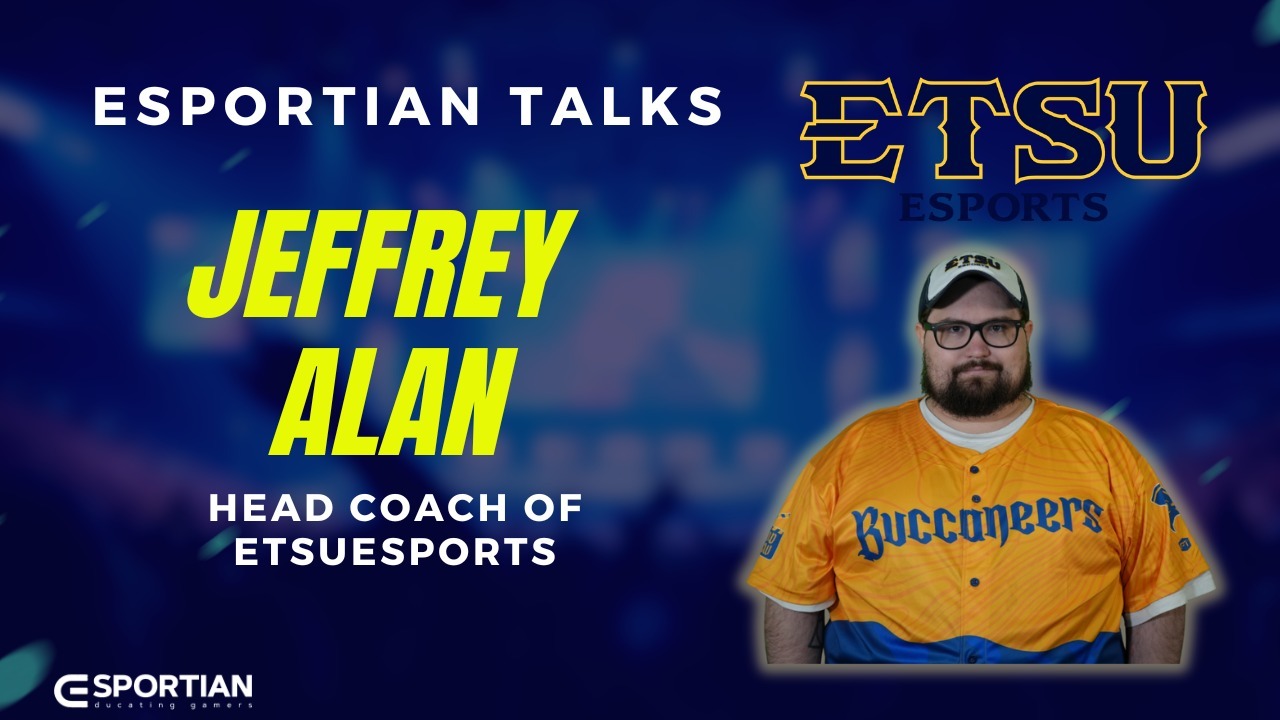
As collegiate esports continues to expand across North America, prospective students face an increasingly complex landscape of programs, scholarship structures, and institutional environments. In an extended interview, Jeff Alan Esports Director at East Tennessee State University (ETSU), he offers a rigorous framework for evaluating universities that aligns with long-term academic, financial, and developmental outcomes. With nearly a decade of experience in collegiate esports, including the full-scale construction of ETSU’s varsity program, Jeff brings an analytical, institution-level perspective that many high school students lack when beginning their search.
His primary argument is fundamentally an academic and financial decision that must be grounded in institutional stability and a realistic understanding of career trajectories. Esports, in this view, is not the center of the decision-making process but a complement to broader educational objectives.
Alan emphasizes that the first and most consequential factor students must evaluate is affordability. He warns against the common tendency to compare scholarship amounts in isolation, noting that a high-value esports scholarship at a costly private institution can still leave students with substantial financial burdens. True affordability requires examining total cost of attendance, including tuition, housing, fees, insurance, and, for international students, additional expenses such as visa processes and travel.
This perspective reflects a larger trend in higher education research that highlights financial overextension as a primary cause of attrition among first-year students. Jeff’s insistence on financial literacy serves as a corrective to a scholarship-centric approach that often misleads students into committing to institutions they ultimately cannot afford to remain enrolled in. In parallel with financial considerations, he argues that students must examine the structural stability of the university itself.
Because esports programs are dependent on institutional health, enrollment trends serve as an early indicator of sustainability. Declining student populations can precipitate budget reductions, program cuts, and leadership turnover, variables that directly affect the viability of non-core programs such as esports. Public universities, in particular, provide accessible data through board of trustees reports and enrollment summaries, allowing students and families to conduct basic due diligence.
Jeff situates this evaluation within the broader demographic phenomenon of the “enrollment cliff,” an expected nationwide reduction in U.S. college-aged populations, underscoring the importance of selecting a university positioned to withstand these pressures. While esports may serve as the initial point of attraction for many high school applicants, he assigns academic fit a far greater weight in the decision process.
He advises students to assume a 75-25 balance in favor of academics, except in rare cases where a player is already competing at the upper tiers of professional pipelines. This recommendation reflects an understanding of the volatility of esports careers and the importance of degrees that retain labor-market relevance in an economy shaped heavily by automation and artificial intelligence. He further encourages students to evaluate the long-term utility, employment prospects, and personal resonance of their intended academic field, noting that a university degree functions not only as a credential but as a form of stability and professional insurance.
Beyond financial and academic considerations, Alan highlights the critical role of program culture, an aspect often overlooked by high school students due to limited access and visibility. He encourages prospective recruits to examine roster histories, patterns of player turnover, and the overall continuity of team membership. High turnover may reflect instability, misaligned values, or poor internal culture, whereas cohesive multi-year rosters often signal a supportive environment conducive to both competitive and academic success. He further suggests that students speak directly with current players, who provide more transparent insights into daily team dynamics, coaching practices, and the lived experience within the program.
Jeff also underscores the importance of infrastructure and competitive resources. He notes that the quality of equipment, practice facilities, and the ergonomic environment can meaningfully impact a student's performance and well-being. Because the university arena often functions as the primary training environment for student-athletes particularly international students who may not bring personal equipment, facility standards should be evaluated not for their aesthetic appeal but for their functional adequacy and long-term maintenance.
A defining feature of his philosophy is his emphasis on holistic development. He frames esports as a platform for cultivating transferable skills such as critical thinking, communication, leadership, and technical competency in media or production fields. At ETSU, the competitive program is closely integrated with student-led production teams, providing opportunities for students to acquire practical experience that can serve as portfolio artifacts for future employment. This aligns with contemporary educational models that emphasize experiential learning and the development of professional competencies alongside academic coursework.
Scholarships themselves, Alan notes, must be contextualized within this broader framework. He cautions students not to assume that esports scholarships will constitute the majority of their financial aid packages. In most cases, academic achievement yields higher and more stable forms of institutional aid. Coaches, including him, often prioritize students who demonstrate academic reliability, strong communication skills, and personal initiative, qualities that correlate strongly with four-year retention and team cohesion.
Finally, Jeff addresses the psychological and developmental dimension of collegiate esports. He stresses that students must understand and prepare for the dual-identity nature of the collegiate esports experience: they are both students and competitors. Effective programs balance competitive performance with academic responsibilities, avoid creating environments of constant pressure, and provide structures that support mental health, time management, and long-term success.
Taken together, Alan’s framework provides a rigorous, academically grounded model for evaluating collegiate esports programs. It situates esports within the larger educational ecosystem, emphasizing that the true value of a collegiate experience lies not solely in competitive outcomes but in its capacity to support intellectual growth, financial stability, skill development, and long-term professional readiness.
His primary argument is fundamentally an academic and financial decision that must be grounded in institutional stability and a realistic understanding of career trajectories. Esports, in this view, is not the center of the decision-making process but a complement to broader educational objectives.
Alan emphasizes that the first and most consequential factor students must evaluate is affordability. He warns against the common tendency to compare scholarship amounts in isolation, noting that a high-value esports scholarship at a costly private institution can still leave students with substantial financial burdens. True affordability requires examining total cost of attendance, including tuition, housing, fees, insurance, and, for international students, additional expenses such as visa processes and travel.
This perspective reflects a larger trend in higher education research that highlights financial overextension as a primary cause of attrition among first-year students. Jeff’s insistence on financial literacy serves as a corrective to a scholarship-centric approach that often misleads students into committing to institutions they ultimately cannot afford to remain enrolled in. In parallel with financial considerations, he argues that students must examine the structural stability of the university itself.
Because esports programs are dependent on institutional health, enrollment trends serve as an early indicator of sustainability. Declining student populations can precipitate budget reductions, program cuts, and leadership turnover, variables that directly affect the viability of non-core programs such as esports. Public universities, in particular, provide accessible data through board of trustees reports and enrollment summaries, allowing students and families to conduct basic due diligence.
Jeff situates this evaluation within the broader demographic phenomenon of the “enrollment cliff,” an expected nationwide reduction in U.S. college-aged populations, underscoring the importance of selecting a university positioned to withstand these pressures. While esports may serve as the initial point of attraction for many high school applicants, he assigns academic fit a far greater weight in the decision process.
He advises students to assume a 75-25 balance in favor of academics, except in rare cases where a player is already competing at the upper tiers of professional pipelines. This recommendation reflects an understanding of the volatility of esports careers and the importance of degrees that retain labor-market relevance in an economy shaped heavily by automation and artificial intelligence. He further encourages students to evaluate the long-term utility, employment prospects, and personal resonance of their intended academic field, noting that a university degree functions not only as a credential but as a form of stability and professional insurance.
Beyond financial and academic considerations, Alan highlights the critical role of program culture, an aspect often overlooked by high school students due to limited access and visibility. He encourages prospective recruits to examine roster histories, patterns of player turnover, and the overall continuity of team membership. High turnover may reflect instability, misaligned values, or poor internal culture, whereas cohesive multi-year rosters often signal a supportive environment conducive to both competitive and academic success. He further suggests that students speak directly with current players, who provide more transparent insights into daily team dynamics, coaching practices, and the lived experience within the program.
Jeff also underscores the importance of infrastructure and competitive resources. He notes that the quality of equipment, practice facilities, and the ergonomic environment can meaningfully impact a student's performance and well-being. Because the university arena often functions as the primary training environment for student-athletes particularly international students who may not bring personal equipment, facility standards should be evaluated not for their aesthetic appeal but for their functional adequacy and long-term maintenance.
A defining feature of his philosophy is his emphasis on holistic development. He frames esports as a platform for cultivating transferable skills such as critical thinking, communication, leadership, and technical competency in media or production fields. At ETSU, the competitive program is closely integrated with student-led production teams, providing opportunities for students to acquire practical experience that can serve as portfolio artifacts for future employment. This aligns with contemporary educational models that emphasize experiential learning and the development of professional competencies alongside academic coursework.
Scholarships themselves, Alan notes, must be contextualized within this broader framework. He cautions students not to assume that esports scholarships will constitute the majority of their financial aid packages. In most cases, academic achievement yields higher and more stable forms of institutional aid. Coaches, including him, often prioritize students who demonstrate academic reliability, strong communication skills, and personal initiative, qualities that correlate strongly with four-year retention and team cohesion.
Finally, Jeff addresses the psychological and developmental dimension of collegiate esports. He stresses that students must understand and prepare for the dual-identity nature of the collegiate esports experience: they are both students and competitors. Effective programs balance competitive performance with academic responsibilities, avoid creating environments of constant pressure, and provide structures that support mental health, time management, and long-term success.
Taken together, Alan’s framework provides a rigorous, academically grounded model for evaluating collegiate esports programs. It situates esports within the larger educational ecosystem, emphasizing that the true value of a collegiate experience lies not solely in competitive outcomes but in its capacity to support intellectual growth, financial stability, skill development, and long-term professional readiness.
