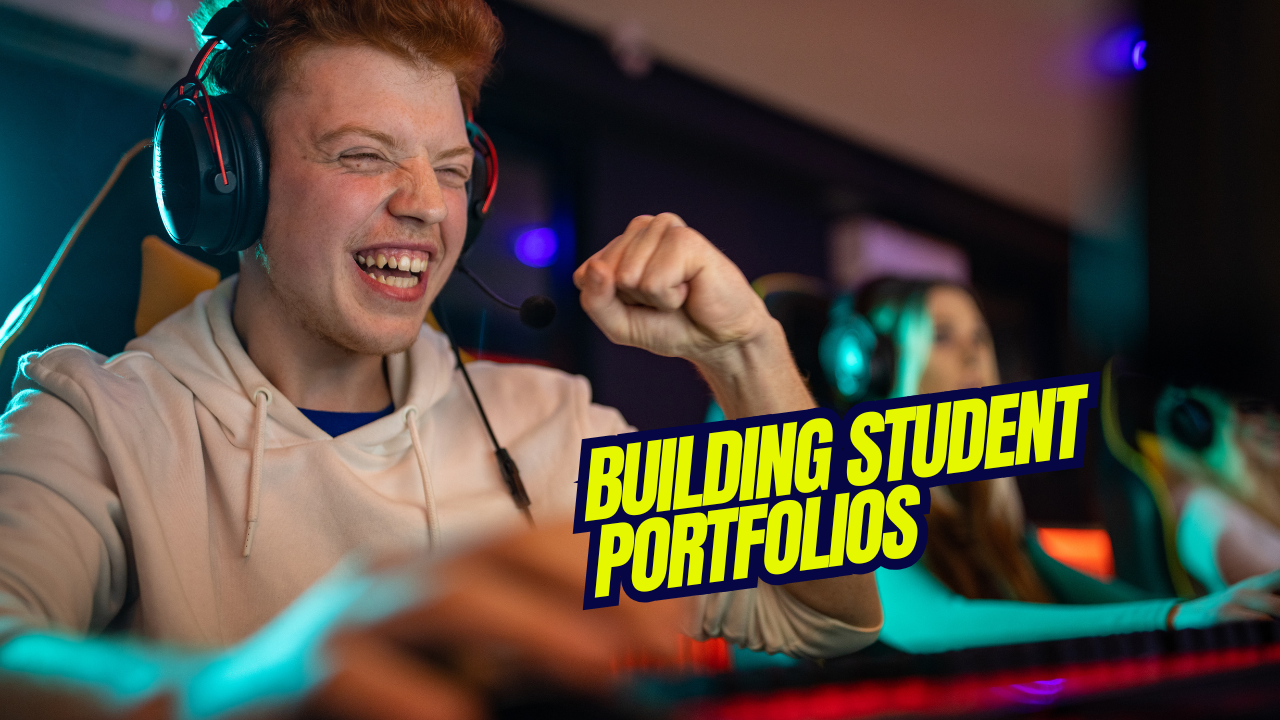
In conversations with student gamers across the world, a familiar belief continues to surface: if you want a career in esports, you need to be good enough to play on stage. After years of working alongside collegiate programs, coaches, and industry leaders, a different reality becomes clear. The majority of sustainable, long-term careers in esports are not created through competitive rosters, but through the infrastructure that supports them.
After observing hundreds of collegiate esports programs evolve, a consistent pattern emerges. The students who graduate with the strongest career outcomes are often not the varsity players. They are the broadcasters, observers, producers, analysts, social media leads, and event coordinators who learned how the industry actually functions. While rosters change every season, these roles form the operational backbone of esports.
This disconnect between perception and reality is one of the most consequential challenges facing esports education today. Students are taught to chase competition, but rarely shown the ecosystem that makes competition possible. At the surface level, students believe esports careers are scarce because professional playing opportunities are limited. They see only a handful of players make it to tier-one competition and conclude that esports is too risky to pursue seriously. This belief often pushes talented students away from the industry altogether.
Beneath that lies a more personal frustration. Students remain involved in collegiate esports for years, practicing, competing, and sacrificing time, only to graduate without transferable experience. They leave with memories, but not with portfolios, reels, or concrete professional skills that translate to employment. The deeper issue, however, is structural. Collegiate esports has historically modeled itself after traditional athletics , prioritizing wins, rankings, and rosters. In doing so, many programs unintentionally ignore the very roles that drive esports as an industry. Broadcast, production, content, and media are treated as secondary or optional, rather than foundational. As a result, students are underprepared for the reality of how esports careers are actually built.
Consider a common scenario seen across campuses:
A student joins an esports program as a player, but quickly realizes the competitive demands are higher than expected. Instead of disengaging, they volunteer to help with streams. At first, it is small tasks, overlay management, social clips, or stat tracking. Over time, they begin learning commentary, replay systems, camera direction, and show flow.
By their junior year, this student is running weekly broadcasts, managing student crews, and producing content with measurable reach. By graduation, they have a portfolio that includes live event production, on-air experience, analytics, and leadership. While many former teammates struggle to define their esports experience on a resume, this student transitions directly into work with leagues, agencies, publishers, or media companies.
This story is becoming the norm in programs that intentionally invest in broadcast and production ecosystems. The solution is not to move away from competition, but to expand what collegiate esports values and develops. Broadcast, content, and production should not exist on the margins of programs. They should be embedded into the foundation. When students are given structured roles in production crews, they learn far more than technical skills. They develop communication under pressure, team coordination, creative decision-making, and operational discipline. They learn how to deliver live products to real audiences, often on tight timelines and limited budgets, conditions that mirror professional environments.
Programs that formalize these pathways treat broadcasts as laboratories. Students rotate through commentary, observing, directing, producing, and content distribution. They receive feedback, build progressive responsibility, and graduate with documented experience rather than abstract participation. Most importantly, these opportunities scale. A single broadcast can involve dozens of students across multiple disciplines, creating access far beyond what a competitive roster ever could.
For students, this approach fundamentally changes outcomes. Graduates leave with demo reels, production credits, social analytics, and references grounded in real work. They are no longer “former esports players,” but early-career professionals with tangible experience. For institutions, integrated media and broadcast programs improve retention, recruitment, and academic alignment. Esports becomes a multidisciplinary platform connected to communications, marketing, journalism, business, and technology programs. The value of esports extends beyond competition into measurable educational impact.
Esports does not need fewer players chasing professional dreams. It needs more students building the systems that allow those dreams to exist (It came from the soul). If you are a student, coach, or administrator involved in collegiate esports, ask a simple question: what skills are students graduating with, and can they prove them? The answers often reveal where programs must evolve next.
After observing hundreds of collegiate esports programs evolve, a consistent pattern emerges. The students who graduate with the strongest career outcomes are often not the varsity players. They are the broadcasters, observers, producers, analysts, social media leads, and event coordinators who learned how the industry actually functions. While rosters change every season, these roles form the operational backbone of esports.
This disconnect between perception and reality is one of the most consequential challenges facing esports education today. Students are taught to chase competition, but rarely shown the ecosystem that makes competition possible. At the surface level, students believe esports careers are scarce because professional playing opportunities are limited. They see only a handful of players make it to tier-one competition and conclude that esports is too risky to pursue seriously. This belief often pushes talented students away from the industry altogether.
Beneath that lies a more personal frustration. Students remain involved in collegiate esports for years, practicing, competing, and sacrificing time, only to graduate without transferable experience. They leave with memories, but not with portfolios, reels, or concrete professional skills that translate to employment. The deeper issue, however, is structural. Collegiate esports has historically modeled itself after traditional athletics , prioritizing wins, rankings, and rosters. In doing so, many programs unintentionally ignore the very roles that drive esports as an industry. Broadcast, production, content, and media are treated as secondary or optional, rather than foundational. As a result, students are underprepared for the reality of how esports careers are actually built.
Consider a common scenario seen across campuses:
A student joins an esports program as a player, but quickly realizes the competitive demands are higher than expected. Instead of disengaging, they volunteer to help with streams. At first, it is small tasks, overlay management, social clips, or stat tracking. Over time, they begin learning commentary, replay systems, camera direction, and show flow.
By their junior year, this student is running weekly broadcasts, managing student crews, and producing content with measurable reach. By graduation, they have a portfolio that includes live event production, on-air experience, analytics, and leadership. While many former teammates struggle to define their esports experience on a resume, this student transitions directly into work with leagues, agencies, publishers, or media companies.
This story is becoming the norm in programs that intentionally invest in broadcast and production ecosystems. The solution is not to move away from competition, but to expand what collegiate esports values and develops. Broadcast, content, and production should not exist on the margins of programs. They should be embedded into the foundation. When students are given structured roles in production crews, they learn far more than technical skills. They develop communication under pressure, team coordination, creative decision-making, and operational discipline. They learn how to deliver live products to real audiences, often on tight timelines and limited budgets, conditions that mirror professional environments.
Programs that formalize these pathways treat broadcasts as laboratories. Students rotate through commentary, observing, directing, producing, and content distribution. They receive feedback, build progressive responsibility, and graduate with documented experience rather than abstract participation. Most importantly, these opportunities scale. A single broadcast can involve dozens of students across multiple disciplines, creating access far beyond what a competitive roster ever could.
For students, this approach fundamentally changes outcomes. Graduates leave with demo reels, production credits, social analytics, and references grounded in real work. They are no longer “former esports players,” but early-career professionals with tangible experience. For institutions, integrated media and broadcast programs improve retention, recruitment, and academic alignment. Esports becomes a multidisciplinary platform connected to communications, marketing, journalism, business, and technology programs. The value of esports extends beyond competition into measurable educational impact.
Esports does not need fewer players chasing professional dreams. It needs more students building the systems that allow those dreams to exist (It came from the soul). If you are a student, coach, or administrator involved in collegiate esports, ask a simple question: what skills are students graduating with, and can they prove them? The answers often reveal where programs must evolve next.
