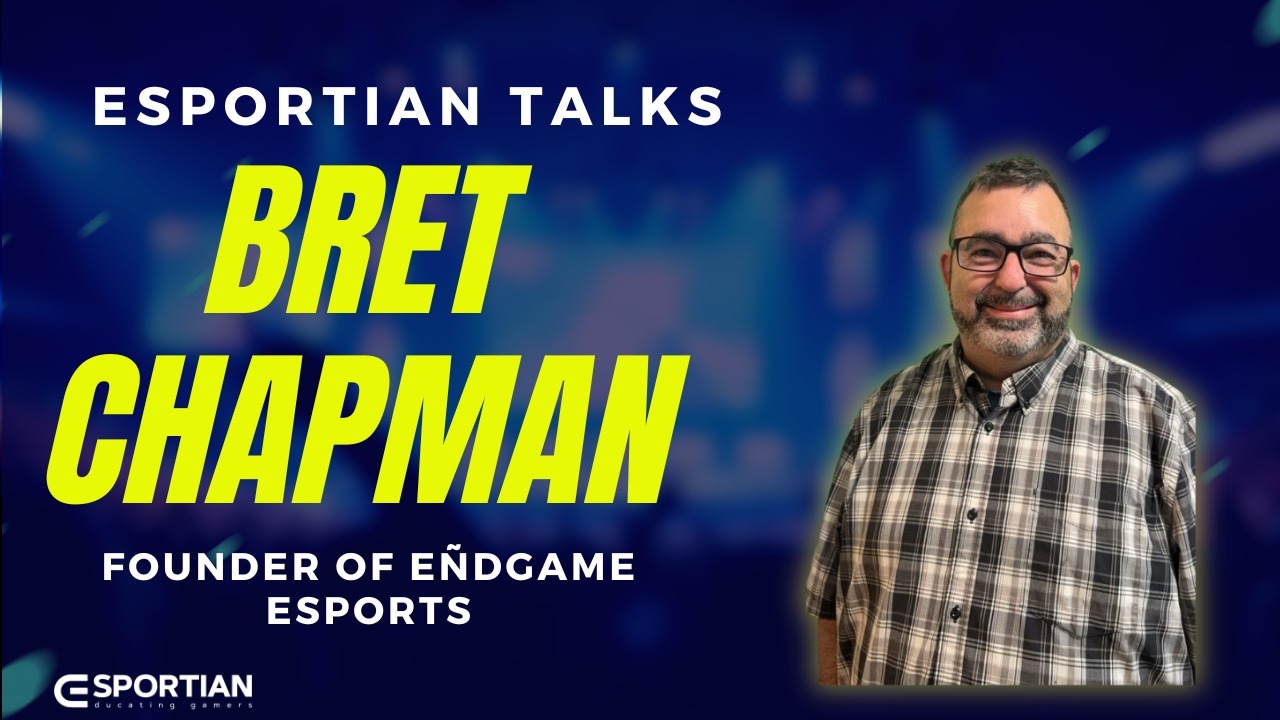
Bret Chapman M.Ed , founder, global mentor, and leadership & family systems coach, has become a leading voice in the push to integrate esports into broader educational systems. His journey began in 2019 when his youngest son declared a desire to pursue esports professionally. What followed was an eye-opening experience into the realities of coaching, the gaps in player development, and the urgent need for better leadership and institutional support. Today, he uses his background in youth work and leadership systems to help educators, families, and administrators understand how to embed esports into schools while prioritizing long-term growth and well-being.
Bret emphasizes that esports programs must be fully integrated into existing educational and athletic systems not treated as a side project. Many programs today sit in business departments or extracurricular spaces, without alignment to athletics or student development. This creates confusion, inconsistent standards, and limited legitimacy.
For him, the long-term solution is to align esports under athletics, where student support systems, coaching structures, and leadership models already exist. As esports grows and aligns with global movements like the Olympic Esports Games, he argues that institutions will need to formalize esports in the same way traditional sports are organized: clear pathways, structured pipelines, and governance.
A recurring theme in Bret’s work is the quality of coaching in esports. Too often, players are pushed into coaching roles without training, relying on their own success as competitors rather than proven leadership skills. The result is environments rife with toxicity and short-term thinking.
He calls for a reorientation of coaching that blends philosophy, psychology, and practical skills. Coaches must move beyond the “my way or the highway” model that dominates esports and instead adopt developmental and holistic approaches. He highlights empathy, compassion, and transferable skill-building as the most overlooked qualities in effective coaching. The goal is shaping people who can thrive both in competition and beyond it.
Bret also draws attention to the developmental gaps in esports. Unlike traditional athletes who grow up in structured team environments, many esports players train alone, with little experience in teamwork or interpersonal development. By the time they reach collegiate or professional levels, they may lack essential skills to function as teammates.
His solution is to create developmental foundations early. Grassroots and high school programs should introduce coaching pipelines, resilience training, and values-based leadership. He stresses that every esports program should include at least one coaching philosophy course drawing from both esports and traditional athletics to train future leaders. Without these foundations, students risk burnout, disconnection, and limited career prospects.
The vision extends beyond individual teams. He believes institutions must design frameworks that balance competitiveness with human development. Universities need to integrate professionals from the industry into teaching roles, ensuring that students gain real-world wisdom alongside academic knowledge. He also advocates for using platforms like LinkedIn and social media as living classroom spaces where students share learning, receive feedback, and grow within the community.
Bret Chapman’s story highlights the urgent need for intentional design in collegiate esports. By embedding esports into institutional frameworks, rethinking leadership orientation, and prioritizing developmental foundations, schools can create environments where players not only succeed in competition but also build resilience, transferable skills, and long-term opportunities. His work is a reminder that esports is a platform to shape leaders for the digital generation.
Bret emphasizes that esports programs must be fully integrated into existing educational and athletic systems not treated as a side project. Many programs today sit in business departments or extracurricular spaces, without alignment to athletics or student development. This creates confusion, inconsistent standards, and limited legitimacy.
For him, the long-term solution is to align esports under athletics, where student support systems, coaching structures, and leadership models already exist. As esports grows and aligns with global movements like the Olympic Esports Games, he argues that institutions will need to formalize esports in the same way traditional sports are organized: clear pathways, structured pipelines, and governance.
A recurring theme in Bret’s work is the quality of coaching in esports. Too often, players are pushed into coaching roles without training, relying on their own success as competitors rather than proven leadership skills. The result is environments rife with toxicity and short-term thinking.
He calls for a reorientation of coaching that blends philosophy, psychology, and practical skills. Coaches must move beyond the “my way or the highway” model that dominates esports and instead adopt developmental and holistic approaches. He highlights empathy, compassion, and transferable skill-building as the most overlooked qualities in effective coaching. The goal is shaping people who can thrive both in competition and beyond it.
Bret also draws attention to the developmental gaps in esports. Unlike traditional athletes who grow up in structured team environments, many esports players train alone, with little experience in teamwork or interpersonal development. By the time they reach collegiate or professional levels, they may lack essential skills to function as teammates.
His solution is to create developmental foundations early. Grassroots and high school programs should introduce coaching pipelines, resilience training, and values-based leadership. He stresses that every esports program should include at least one coaching philosophy course drawing from both esports and traditional athletics to train future leaders. Without these foundations, students risk burnout, disconnection, and limited career prospects.
The vision extends beyond individual teams. He believes institutions must design frameworks that balance competitiveness with human development. Universities need to integrate professionals from the industry into teaching roles, ensuring that students gain real-world wisdom alongside academic knowledge. He also advocates for using platforms like LinkedIn and social media as living classroom spaces where students share learning, receive feedback, and grow within the community.
Bret Chapman’s story highlights the urgent need for intentional design in collegiate esports. By embedding esports into institutional frameworks, rethinking leadership orientation, and prioritizing developmental foundations, schools can create environments where players not only succeed in competition but also build resilience, transferable skills, and long-term opportunities. His work is a reminder that esports is a platform to shape leaders for the digital generation.
