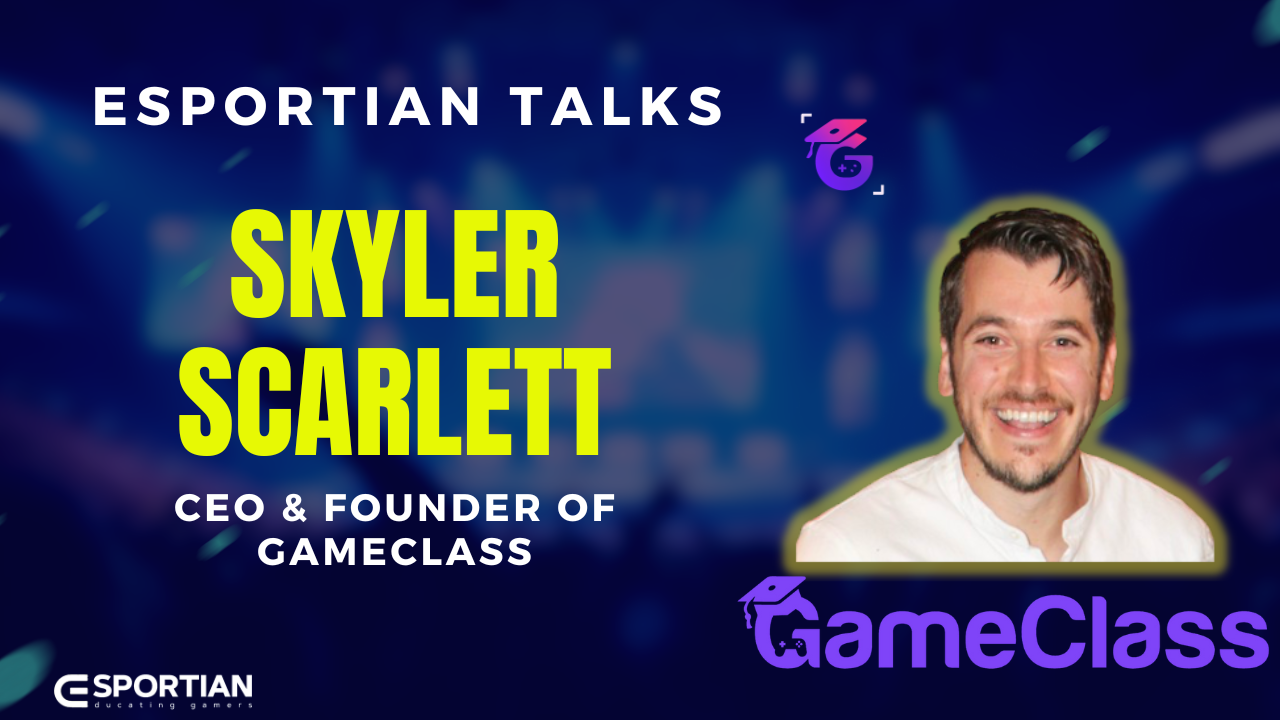
The narrative surrounding esports and gaming has long been dominated by the dream of becoming a professional player. Yet, statistically, fewer than one percent of gamers will ever reach professional status, leaving the vast majority of students without a clear sense of how to channel their passion into meaningful opportunities. This binary view: either “go pro” or “give up” fails to account for the many career pathways that exist within the gaming ecosystem. 🎮 Skyler Scarlett , Founder and CEO of GameClass , is working to change this narrative. Drawing on over fifteen years of entrepreneurial experience, Scarlett has created a platform that enables students to leverage their gaming expertise in ways that build transferable skills, expand career prospects, and validate gaming as a powerful educational tool.
For too long, educational institutions, parents, and even students themselves have subscribed to a narrow conception of success in gaming. The prevailing belief has been that the only way forward is through competitive play at the highest level. However, this perspective overlooks both the structural barriers to entering professional esports and the wealth of alternative roles that sustain the industry. Content creators, coaches, tournament organizers, and entrepreneurs all contribute to the global gaming economy. By focusing exclusively on the professional track, many students miss the opportunity to develop complementary skills that could support long-term growth and resilience in their careers.
Skyler’s own career illustrates the value of adaptability and vision. Having built and sold businesses in the wellness sector, he was forced to rethink his trajectory when the COVID-19 pandemic shuttered his health club operations in California. During this period, he returned to gaming, an early passion and began to observe its pedagogical potential. Playing titles such as Call of Duty: Warzone, he noted that team performance was often determined less by individual mechanical skill and more by communication and collaboration. This observation raised a fundamental question: why were schools and educators not making greater use of commercial video games as teaching tools? Rather than attempting to design new educational games, he recognized the untapped potential of building educational frameworks around the titles that students already engage with daily.
GameClass was founded on the principle that professional play represents only one of many possible outcomes for students interested in gaming. The platform emphasizes applied learning, ensuring that students do not merely discuss strategies or theories but actively engage in skill-building that has relevance both inside and outside the game. Through structured experiences, participants explore coaching, content creation, and entrepreneurial ventures. For example, students may assume the role of mentor to younger players, organize and manage competitive events, or produce educational content that contributes to community learning. These activities mirror real-world professional contexts, offering students a chance to develop leadership, communication, and organizational abilities in a domain they find meaningful.
What distinguishes GameClass is not only its ability to create career exploration within the gaming industry but also its capacity to highlight transferable skills that resonate with universities and employers. Communication, teamwork, and initiative are consistently cited as core competencies for success in the twenty-first-century workforce. By embedding these outcomes into a familiar and engaging medium, GameClass reframes gaming as a legitimate educational pathway rather than a distraction. Students who participate emerge with a clearer sense of their strengths, a portfolio of demonstrable experiences, and in many cases, a stronger foundation for academic success.
Skyler Scarlett’s work with GameClass underscores a critical shift in how gaming is understood within education and career development. By moving beyond the restrictive notion of professional play as the only valid outcome, platforms like GameClass highlight the diverse opportunities available to students who wish to integrate their passion for gaming with their future aspirations. In doing so, Scarlett demonstrates that gaming is a space for the cultivation of skills, networks, and entrepreneurial ventures that have enduring value.
For too long, educational institutions, parents, and even students themselves have subscribed to a narrow conception of success in gaming. The prevailing belief has been that the only way forward is through competitive play at the highest level. However, this perspective overlooks both the structural barriers to entering professional esports and the wealth of alternative roles that sustain the industry. Content creators, coaches, tournament organizers, and entrepreneurs all contribute to the global gaming economy. By focusing exclusively on the professional track, many students miss the opportunity to develop complementary skills that could support long-term growth and resilience in their careers.
Skyler’s own career illustrates the value of adaptability and vision. Having built and sold businesses in the wellness sector, he was forced to rethink his trajectory when the COVID-19 pandemic shuttered his health club operations in California. During this period, he returned to gaming, an early passion and began to observe its pedagogical potential. Playing titles such as Call of Duty: Warzone, he noted that team performance was often determined less by individual mechanical skill and more by communication and collaboration. This observation raised a fundamental question: why were schools and educators not making greater use of commercial video games as teaching tools? Rather than attempting to design new educational games, he recognized the untapped potential of building educational frameworks around the titles that students already engage with daily.
GameClass was founded on the principle that professional play represents only one of many possible outcomes for students interested in gaming. The platform emphasizes applied learning, ensuring that students do not merely discuss strategies or theories but actively engage in skill-building that has relevance both inside and outside the game. Through structured experiences, participants explore coaching, content creation, and entrepreneurial ventures. For example, students may assume the role of mentor to younger players, organize and manage competitive events, or produce educational content that contributes to community learning. These activities mirror real-world professional contexts, offering students a chance to develop leadership, communication, and organizational abilities in a domain they find meaningful.
What distinguishes GameClass is not only its ability to create career exploration within the gaming industry but also its capacity to highlight transferable skills that resonate with universities and employers. Communication, teamwork, and initiative are consistently cited as core competencies for success in the twenty-first-century workforce. By embedding these outcomes into a familiar and engaging medium, GameClass reframes gaming as a legitimate educational pathway rather than a distraction. Students who participate emerge with a clearer sense of their strengths, a portfolio of demonstrable experiences, and in many cases, a stronger foundation for academic success.
Skyler Scarlett’s work with GameClass underscores a critical shift in how gaming is understood within education and career development. By moving beyond the restrictive notion of professional play as the only valid outcome, platforms like GameClass highlight the diverse opportunities available to students who wish to integrate their passion for gaming with their future aspirations. In doing so, Scarlett demonstrates that gaming is a space for the cultivation of skills, networks, and entrepreneurial ventures that have enduring value.
